
.webp)
Some nights, you just want your kid to land somewhere soft, crack a book, and quiet down without a negotiation. A small reading nook can do that—without a renovation, and without stealing space you don’t have. These ideas work in corners, closets, under beds, and those awkward spots you usually ignore. Pick one that fits your layout, add comfort + light, and you’ll be shocked how often they actually use it.
Why Small Reading Nooks Matter More Than Big Ones
Big spaces look pretty. Small spaces get used.
- Less friction: Kids sit down faster when the setup feels ready—cushion, light, book, done.
- Fewer distractions: A tight nook blocks the room’s visual noise (toys, screens, sibling chaos).
- It feels “theirs”: Small spaces create that secret-club energy without you buying a single extra square foot.
- The non-obvious win: A nook becomes a habit trigger. When they pass it, they remember reading exists.
A “good enough” nook they use daily beats a perfect one they use twice a month.
1. Closet Turned Secret Reading Hideout

The second you turn a closet into a nook, kids stop treating reading like homework and start treating it like a mission. It feels private. It feels theirs. And in a small home, that’s gold.
How I’d set it up (without making it a weekend-long project):
- Clear the bottom half and aim for a 24–30 inch deep sitting area (even tight closets can handle this).
- Add a foam pad or twin-sized floor cushion instead of a chair. Chairs waste inches.
- Swap the harsh ceiling bulb for warm string lights or a plug-in sconce (soft light changes the whole mood).
- Put books on slim picture ledges or narrow shelves so covers face out—kids pick faster when they can see them.
- Hang a simple curtain or tension-rod drape at the opening. Instant “hideout.”
Keep a tiny basket inside for a flashlight, bookmark, and 2–3 current favorites so it stays “alive,” not decorative.
Budget range: $40–$180 — and honestly, the cheapest version works if you already have a cushion and a strand of lights.
2. Corner Floor Cushion Nook

A good corner nook feels like you “found” extra space you swear didn’t exist yesterday. And kids love a floor setup because they can sprawl, not balance.
Make the corner do the work:
- Put down one round floor cushion or a folding floor mattress (about 30–40 inches wide is the sweet spot).
- Add 2–3 pillows in different sizes so they can wedge themselves in however they want.
- Hang a light canopy or fabric drape from a ceiling hook. Instant boundary. Instant magic.
- Keep books within reach: a low basket or a single picture ledge beats a tall shelf (less climbing, fewer spills).
- Use warm string lights or a clip-on reading light—bright overhead lighting kills the vibe fast.
One small thing that changes everything: keep a “current stack” of 5–8 books in the nook and rotate weekly. Too many choices and they bail.
Budget range: $25–$120 — if you already own a spare pillow pile, you’re basically halfway there.
3. Under-Bed Reading Cave

This one feels like cheating in the best way. You’re not “adding” a reading nook—you’re claiming space you already own. And kids read longer when it feels like a hideout, not a station.
How to make it work under a bed (without bonking heads):
- You want at least 30–36 inches of clearance to make it feel usable (loft beds and many built-ins are perfect).
- Start with something soft that covers the whole footprint: a 3′ x 5′ rug or a thin floor mattress.
- Add lighting that stays put: string lights tucked along the frame or an adhesive puck light (no floor lamps to trip over).
- Keep books low and grabby: one under-bed bin or a short shelf right at the edge.
- If the space feels too open, hang a short curtain panel on a tension rod. It turns “under the bed” into “my cave.”
The trick is comfort. If they can’t lean, flop, or curl up, they’ll migrate back to the couch in 30 seconds.
Budget range: $30–$150 — spend on the cushion/rug; everything else can be thrifted or hacked.
4. Window Sill Reading Spot

A window nook does something no lamp can: it makes reading feel like a little escape hatch. Even five quiet minutes hits different when there’s daylight and something to look at besides a wall.
Make it work in a small space (even without a built-in):
- Aim for a bench depth of 16–20 inches so it feels like a seat, not a shelf.
- Use a single thick cushion (one piece looks calmer than a bunch of smaller pads sliding around).
- Add 2–3 pillows for back support—kids slump hard when they’re into a story.
- Keep books close but not cluttered: one picture ledge on the side wall or a small basket tucked under the seat.
- If the window gets chilly, throw a thin fleece blanket in the nook year-round. Drafty = abandoned nook.
One detail I love: a tiny “page parking spot” like a little tray or shallow basket so they can drop the book and come back without losing their place.
Budget range: $35–$250 — the cushion is the splurge; everything else can be simple.
5. Bookshelf-Side Reading Pocket

This is the easiest nook to pull off in a small space because you’re not hunting for a “nook.” You’re just building a comfy landing zone next to where the books already live. Convenient wins. Every time.
Set it up so it doesn’t become a random pillow pile:
- Use a low floor chair or folding floor cushion (about 25–30 inches wide) so it feels like a “spot,” not a mess.
- Put books on front-facing ledges at kid height. Covers out = they actually choose.
- Add a small rug that’s just big enough for feet and a book stack (a 3′ x 5′ works in most corners).
- Keep a basket for stuffed animals nearby so they don’t invade the reading seat.
- Add one light source: clip-on light, fairy lights, or a tiny lamp on a shelf—just not overhead glare.
The secret: keep the bookshelf selection tight. A rotating 15–25 book display works better than a packed wall of titles.
Budget range: $30–$160 — if you already have shelves, this can be a $30 cushion-and-rug situation.
6. Canopy Tent in an Empty Corner

This is the fastest way to make a reading nook feel like an actual “place,” even if your kid’s room is basically bed + dresser + chaos. A canopy gives the corner boundaries. Kids relax the second they feel a little tucked away.
Make it small-space friendly (and not a tripping hazard):
- Use a ceiling hook and keep the canopy footprint to about 3′ x 3′ (corner-sized, not room-sized).
- Put down one base cushion: a round floor pad or folding mattress that’s easy to move when you vacuum.
- Stick to soft lighting only: string lights up high or behind the fabric, cord secured along the wall.
- Keep “book access” simple: a small basket with 8–12 books beats a huge pile that becomes a messy nest.
- Add one “anchor pillow” for the back (kids love lounging, but they hate having nowhere to lean).
If the canopy starts becoming a toy-storage tent, pull everything out except books and one stuffed animal. The vibe snaps back immediately.
Budget range: $30–$150 — the canopy + lights can be cheap; spend on a cushion that doesn’t go flat in a week.
7. Under-Stairs Reading Nook

Under the stairs is one of those spaces that usually becomes “random storage I’m scared to touch.” Turn it into a reading nook and suddenly it feels intentional—like you planned your house to be cute.
How to make the weird triangle shape work for you:
- Choose low seating that fits the slope: a floor sofa, two cushions, or a bench that’s 16–18 inches high.
- Use picture ledges for books. They’re shallow, they don’t steal head space, and covers stay visible.
- Add a wall light (sconce or plug-in) and aim it down toward the pages, not into their eyes.
- Treat the back wall like a “story wall”: one color, simple wallpaper, or even decals. It makes the nook feel separate from the rest of the house.
- If the nook gets loud (hello, hallway echo), drop a small rug right outside it. Sound softens fast.
Small but important: keep one open spot on the shelf. When it’s jammed full, kids stop putting books back and the whole nook unravels.
Budget range: $50–$300 — you can keep it low by using floor cushions + ledges and skipping built-ins.
8. Shared Bedroom Reading Zone
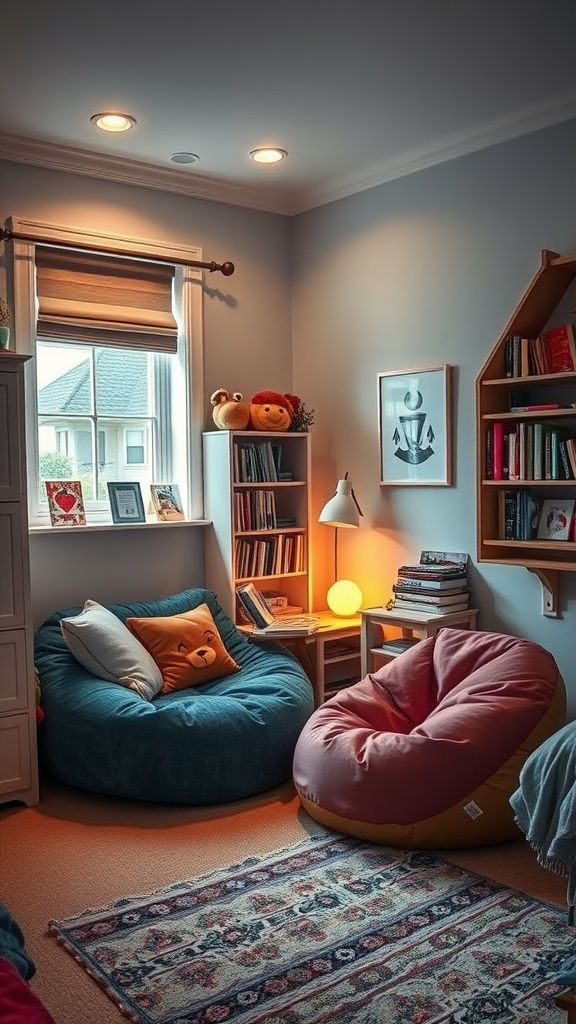
Shared rooms get loud fast. A reading zone fixes that without turning you into the Fun Police. It gives each kid a “this is my spot” feeling—even if they share everything else.
Make it fair (and actually usable):
- Give each kid their own landing pad: two bean bags, or one bean bag + one floor cushion. Aim for 30–36 inches per seat so elbows don’t start wars.
- Put the books in the middle like a snack table: a small shelf or rolling cart between seats works better than “your shelf / my shelf.”
- Use one warm lamp instead of overhead lights. A small table lamp (or wall clip light) makes the corner feel calmer instantly.
- Define the zone with a rug. A 4′ x 6′ rug is enough to signal “this area has a job.”
- Keep “extras” minimal: one blanket per seat, one small basket for bookmarks/flashlights.
If one kid always dominates the space, rotate it in a simple way: even-numbered days = left seat, odd-numbered days = right seat. It sounds silly. It works.
Budget range: $60–$250 — bean bags are the spend; the rest can be secondhand.
9. Hallway Reading Bench Nook

Hallways usually get treated like air—something you pass through and never use. But a hallway bench nook is sneaky good because it steals vertical space, not floor space. And kids love reading somewhere slightly “public” where they still feel included.
Make it work in a narrow corridor:
- Keep the bench depth tight: 14–16 inches is enough for sitting without blocking the walkway.
- Add a single long cushion so it looks tidy and doesn’t slide around.
- Use shallow shelves (or picture ledges) for books above shoulder height, and keep the kids’ picks on the lowest shelf.
- Skip bulky side tables. A tiny wall hook for headphones/flashlight or a small basket under the bench does the job.
- If you can, add a wall sconce or a plug-in lamp nearby. Overhead hallway lights feel like a dentist office.
One practical thing: choose a cushion cover you can zip off and wash. Hallway nooks collect snack fingers like a magnet.
Budget range: $80–$400 — built-ins cost more, but a simple bench + two picture ledges gets you 80% of the vibe.
10. Loft Bed Reading Lounge

The loft bed trick feels like getting an extra room without moving. You sleep up top, you live down below—and that “below” space becomes the easiest reading nook in the house because it’s already naturally cozy.
Set it up so it doesn’t turn into a toy cave:
- Keep the lounge footprint simple: a 4′ x 6′ rug (or smaller) defines the zone fast.
- Add one main seat (bean bag or floor chair) and one backup (floor cushion). More than two turns into a wrestling ring.
- Install lighting that stays out of the way: string lights tucked along the frame + one clip-on reading light near the seat.
- Keep books at arm height: a single narrow shelf or a small book rack under the bed beats stacks on the floor.
- Add one “drop spot” for the book: a tiny tray or a small basket so pages don’t get bent in the chaos.
If the ladder dumps straight into the nook, leave a 12–18 inch clear landing strip so nobody kicks the books on the way down.
Budget range: $60–$350 — if you already own the loft bed, this is mostly seating + light.
Mistakes That Make Small Reading Nooks Feel Useless
- No back support. Floor cushion + no wall pillow = two minutes of reading, then wandering.
- Too many books. A stuffed shelf overwhelms. Keep 15–25 displayed and rotate.
- Bad lighting. Overhead glare kills focus. Add one warm lamp or clip light.
- No boundary. Without a canopy, curtain, rug edge, or shelf “frame,” it reads like random furniture.
- Hard-to-clean setup. If you dread vacuuming around it, it won’t last.
If you can’t reset the nook in 60 seconds, it won’t stay cute—or functional.
How to Make Kids Actually Use the Nook
- Start with a “nook-only” rule: no toys inside except one comfort buddy (one, not twelve).
- Make the first week easy: stack 5–8 high-interest books right there—graphic novels, joke books, short chapters.
- Add a tiny ritual: after school or after dinner, 10 minutes in the nook. Short wins turn into longer ones.
- Let them own one choice: the pillow, the light color, the basket. Ownership beats nagging.
- Keep a bookmark cup or basket so books don’t get “lost” mid-chapter.
If they keep migrating to the couch, the nook needs better comfort—not better decor.
Conclusion
A reading nook doesn’t need a big footprint—it needs a little intention. Give kids a spot that feels cozy, reachable, and “theirs,” and reading stops feeling like a task. It becomes where they go when they want to disappear into a story for a while. And honestly? In a small house, that’s a tiny miracle.